Peptide Pureness Overview 98%, 99% & Research-grade Described Prg
Peptide Quality: Relevance Of Third-party Recognition

Peak Laboratory is a specialized provider of high-purity chemical reagents and peptides. All items noted are purely for in-vitro lab research and development use only. Explore front runner study peptides with batch-specific COA documents and HPLC/MS confirmation. Products are for in-vitro laboratory research use only and are except human intake.
Peptide Useful Analysis In Biomedical Research
" Mass spectrometry solutions "is the detected compound consistent with the intended peptide identification? " Together they supply more powerful batch-level proof than either approach alone. In the typical peptide COA context, peak purity generally refers to the portion of complete chromatogram location represented by the major peptide optimal.
This front-end evaluation reduces rework and boosts the possibility that the very first logical pass will certainly currently be decision-useful. A contemporary HPLC system includes a number of incorporated elements, each serving a particular feature in the splitting up and detection process. Sign up with over 5,000 energetic participants and obtain updates on new kid on the blocks and newest laboratory reports. In The KnowGet access to our catalog, new kid on the blocks, and most recent lab records.
Can Hplc Identify Peptide Degradation?
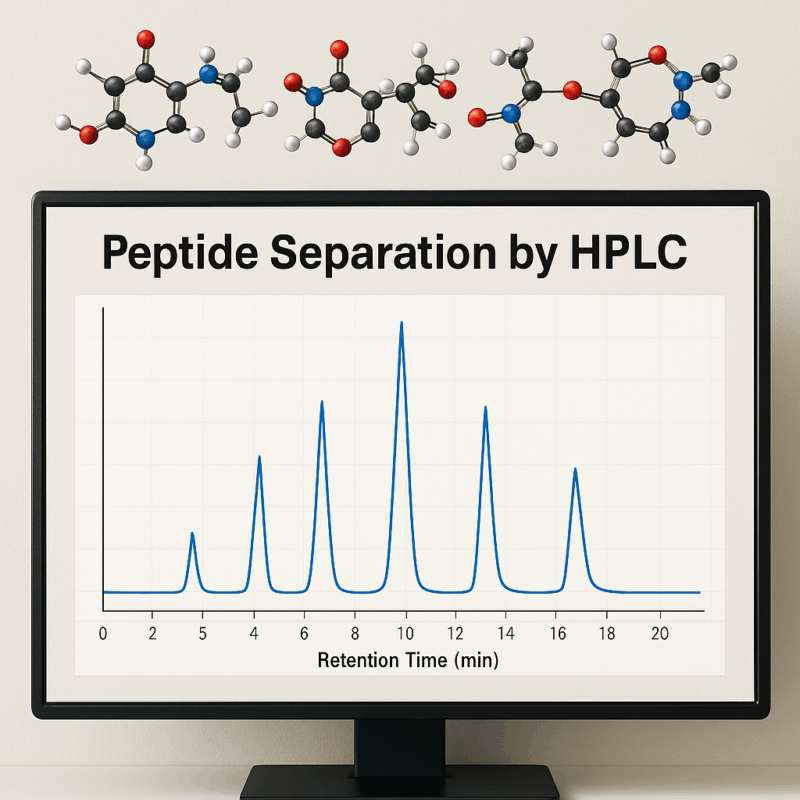
The quality and reliability of a peptide pureness dimension rely on method parameters and documentation top quality. The mobile phase, commonly a mix of water, acetonitrile, and an acid modifier, is saved in tanks and supplied through the system by a high-pressure pump. The pump preserves specific circulation rates, generally in the variety of 0.5 to 2.0 mL/min relying on the approach and column style. High pressure compels the mobile phase with snugly loaded fragments inside the column, creating sharper splittings up and greater resolution than conventional low-pressure chromatography.By insisting on peptides that feature verification of purity and identity, scientists can substantially decrease the danger of speculative artifacts. On the other hand, making use of peptides that have actually passed third-party lab recognition assists make sure that the observed experimental results are absolutely because of the intended peptide and not due to impurities or mistakes. When you see peptides advertised as "research-grade," it describes their planned usage and the level of making oversight. Research-grade peptides are created laboratory research use just-- they are not created under pharmaceutical GMP standards and are not suggested for use as therapies or in people. These peptides include a fundamental quality control plan, usually consisting of HPLC purity evaluation and MS verification of identification, guaranteeing they fulfill clinical standards for purity and structure.
- We choose techniques according to peptide size, hydrophobicity, charge account, and modification standing as opposed to compeling every sample into one template.
- This article will certainly break down exactly how peptide purity is determined, why it stands out from peptide identification, what the typical pureness levels (95%, 98%, 99%) symbolize, and what "research-grade" suggests in technique for peptide reagents.
- We support targeted analysis of relevant residuals based upon the job and sample background.
- If topping isn't perfectly effective, an uncoupled chain can continue to extend in succeeding steps, generating a peptide that's only one residue except the target.
- If the COA notes "overall impurities", that complements the pureness figure (e.g., 98% purity indicates 2% complete pollutants).
Either can be acceptable, but third-party testing is the gold requirement for research-grade products. Residual solvents, such as DMF, acetonitrile, or DMSO, are evaluated making use of gas chromatography (GC) techniques. These solvents can affect peptide functionality, so precise quantification is necessary to ensure pureness and avoid contamination in speculative settings. Peptide stability is analyzed under numerous problems to guarantee reliability during research study and product development.
In vivo tests review absorption, circulation, metabolism, and discharging (ADME) features, better verifying efficiency and security. These screening services not just assist clients enhance items exactly during growth yet additionally supply solid data sustain for regulatory conformity of peptide solutions. Beware of COAs that provide a pureness number with no sustaining chromatographic data, report purity without specifying the logical technique, or list a molecular weight without mass spectrometry confirmation. Tandem mass spectrometry (MS/MS or MS ²) pieces the peptide ions in the gas stage and evaluations the piece masses. This is the gold criterion for peptide identity-- it validates both the make-up and the series. For many peptide jobs, absolute peptide amount matters as high as chromatographic purity. Trustworthy peptide distributors always note their items in this manner and provide top quality records with HPLC and MS information to back up the purity degree. As long as you obtain peptides from a trusted source that supplies a total certification of analysis, you can be confident in the peptide's pureness grade and use extent. Peptides are checked Semax with a combination of methods, including HPLC for pureness, mass spectrometry (MS) for sequence confirmation, and nuclear magnetic resonance (NMR) for architectural evaluation. These techniques assist identify the peptide's structure, confirm the molecular weight, and spot any architectural alterations or pollutants, ensuring the peptide meets top quality and specification needs. With our detailed peptide evaluation system, Creative Proteomics has developed a highly delicate and specialized system.